
Abstract
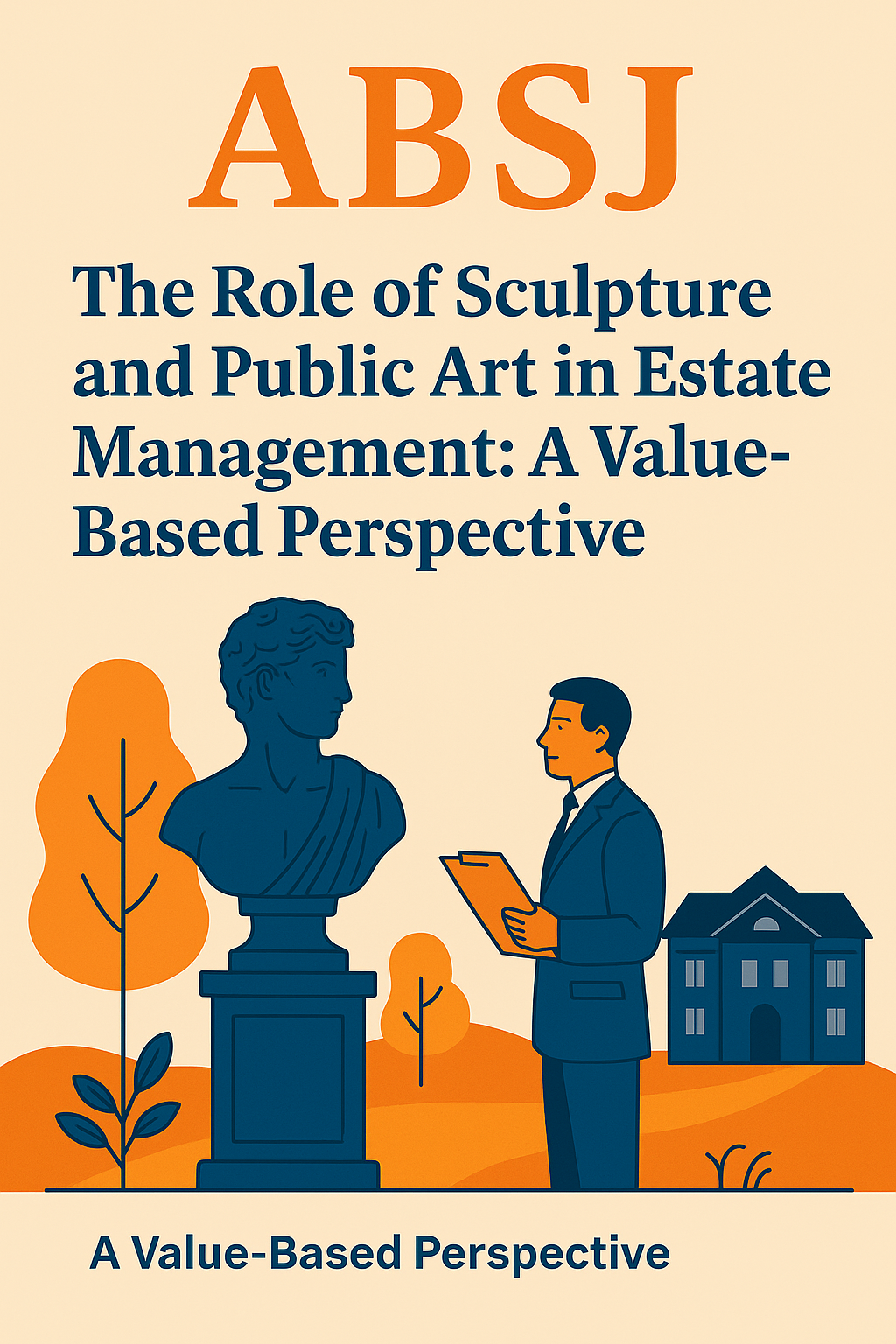
The intersection of sculpture (and public art) and estate management is increasingly important in contemporary real-estate development and property management. This paper explores how sculptural installations and other forms of public art contribute to aesthetic enhancement, place-making, community identity, and economic value in managed estates. Drawing on empirical research and industry reports, the study examines the mechanisms by which art influences property value, tenant/occupant behavior, and long-term asset performance. The implications for estate managers include strategic integration of art into site planning, maintenance regimes, budgeting, and stakeholder engagement. The paper concludes by proffering the adoption of a strategic approach in integrating sculpture and public art as well as promoting stakeholder engagement for enhancement of ownership, inclusiveness and long-term sustainability.
Keywords: Sculpture, Public art, Estate management, Real-estate value, Community engagement
Reviews
There are no reviews yet.